
Skip to content

Six questions, worked through from the first sentence.

Each example follows one person from the question they were asked to the model or assistant they built, using the steps ACTS ML really has.

These are worked examples, not customer stories. The workflow is real; the people and figures are illustrative.

Storm clouds over dry grassland with scattered acacia trees1°48′S 37°38′E
Photo: Polina Koroleva / Unsplash

Planting on a forecast, not a guess

Predictive model·Makueni County, Kenya

A ward agriculture officer wants to tell farmers how much rain to expect each week of the short rains.

The question
“How much rain will fall in the ward each week this season?”
In the project
rainfall_mm · regression
The data
Daily readings from three nearby stationsSatellite rainfall estimatesHer own planting-date notes

How it's built in ACTS ML

  1. In Define problem she answers the wizard's questions, including whether a simpler method would do. Last year's averages had already failed her twice.

  2. The Recommended preprocessing list flags missing readings from a station that went quiet. She imputes them with the median and commits the change with a note.

  3. She picks rainfall_mm as the target. ACTS ML recommends a regression approach and explains why.

  4. Because the data runs over time, she chooses a temporal split so the model is tested on seasons it has not seen.

The result. She tests the model with this season's readings before sharing advice, and retrains it when new station data comes in.
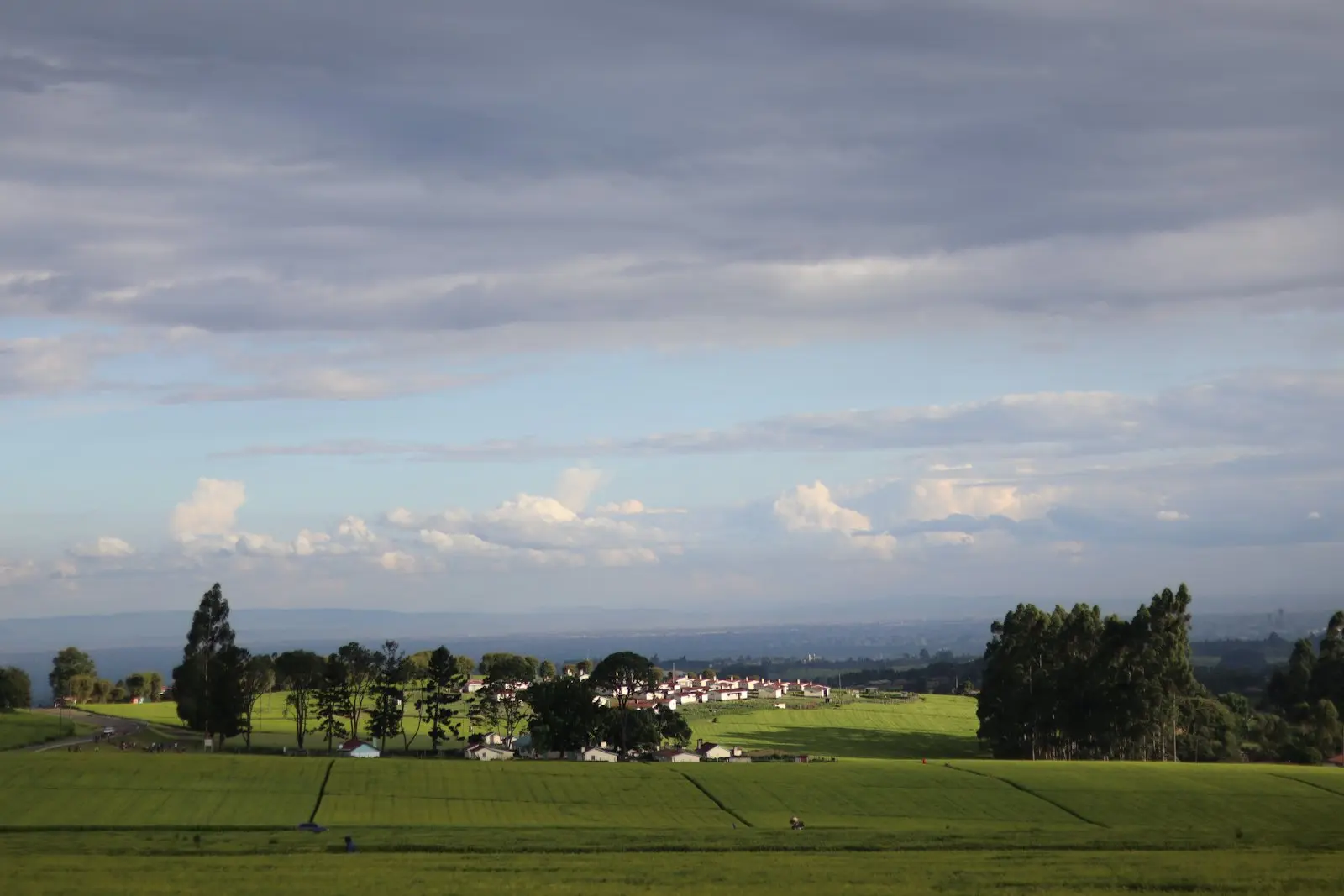

Rolling green tea fields under a wide sky in Kericho0°22′S 35°17′E
Photo: Joe Ol / Unsplash

Finding the plots that will fall short

Predictive model·Kericho County, Kenya

A tea co-operative has six seasons of delivery records and eleven extension officers to send out.

The question
“Which smallholdings are likely to deliver less leaf than last season?”
In the project
yield_drop · classification
The data
Delivery weights per plotFertiliser collection logThe factory rain gauge

How it's built in ACTS ML

  1. The wizard asks whether a simple rule would answer the question. The manager checks one first: last season's weight alone. It gets him part of the way.

  2. In the Data Studio he creates a feature for months since fertiliser was collected, using Create Features.

  3. He sets yield_drop as the target. ACTS ML recommends a classification approach, with its confidence and reasons.

  4. He compares training runs by their metrics and keeps the run with the best recall. Missing a struggling plot costs more than an extra visit.

The result. Officers get a shortlist of plots to visit first. The manager can still overrule the order.

A trader at a fruit stall in a covered market6°48′S 39°17′E
Photo: Ali Mkumbwa / Unsplash

A second look for the right loan applications

Predictive model·Dar es Salaam, Tanzania

A savings and credit co-operative wants help deciding which applications deserve a careful review.

The question
“Which new applications should a loan officer review first?”
In the project
needs_review · classification
The data
Eight years of repayment historyApplication forms

How it's built in ACTS ML

  1. In Define problem the committee names who the model affects, their members, and records that they co-defined the question with them.

  2. In Manage Columns they set a column filled in after loans were decided to Ignored, so the model can't learn from the answer.

  3. They use a stratified split, because only a small share of past loans went bad.

  4. Test latest version lets an officer try an application and see the result before relying on it.

The result. The committee still sets the lending rules. The model only helps decide which files get read first.

Busy street in central Nairobi with matatus, boda bodas and jacaranda trees1°17′S 36°49′E
Photo: Michael Njoroge / Unsplash

Arrival times customers can plan around

Predictive model·Nairobi, Kenya

A small delivery company quotes arrival windows by feel, and loses customers when it rains.

The question
“How many minutes will each delivery take from pickup to drop?”
In the project
eta_minutes · regression
The data
Eighteen months of delivery logsParcel weights and areas

How it's built in ACTS ML

  1. The Data Studio shows rows where the drop time is before the pickup time. She removes them with a row filter and writes down why in the commit message.

  2. Datetime Extract turns each timestamp into hour and day of week, so the model can learn the rush-hour pattern.

  3. ACTS ML recommends a regression approach for the eta_minutes target.

  4. She reads the error metrics in plain terms, in minutes, and checks them against her best rider's estimates.

The result. Dispatch uses one estimate for every rider and every hour, instead of phoning around.

Aerial view of dense rooftops in Nairobi1°18′S 36°54′E
Photo: Evans Dims / Unsplash

Knowing where the taps go dry first

Predictive model·Nairobi, Kenya

A water utility deals with outage reports in the order they arrive. Some are early signs of a bigger failure.

The question
“Which zones are likely to lose supply next month?”
In the project
outage_risk · classification
The data
Three years of outage reportsMonthly meter readings by zonePumping-station pressure logs

How it's built in ACTS ML

  1. Zone names are spelt several ways across the files. He fixes the mapping once, and the commit history keeps a record of it.

  2. Encoding turns zone names into columns the model can use, and scaling puts pressure and volume on the same footing.

  3. He trains with a temporal split so the model is judged on months it has not seen.

  4. He retrains every quarter. Each run keeps its own ID and metrics, so he can show what changed.

The result. Crews start each morning with a short list of zones to check.

A woman working at a laptop and notebook by a window26°12′S 28°03′E
Photo: Sweet Life / Unsplash

Finding the clause before the meeting

AI assistant·Johannesburg, South Africa

A compliance officer reads the same four hundred pages of by-laws every month, looking for one paragraph.

The question
“What do the procurement rules say about this?”
In the project
AI assistant · answers from your sources
The data
Municipal by-laws (PDF)Procurement rules and amendmentsThe council's public notices page

How it's built in ACTS ML

  1. The Assistant Builder asks what the assistant should help with, and she answers in her own words.

  2. She adds the PDFs and the notices page as Knowledge sources. Each one moves from Reading to Indexing to Ready.

  3. Under Refusal & escalation she tells it to refuse legal advice and to point people to the legal office.

  4. In Test assistant she asks the questions she gets every month. Answers come only from the sources she added.

The result. She checks the answers against the documents before she trusts it with the rest of the team.

What would you ask first?

Make a free account and put one question in. The first screen asks what brings you, and points you to the right place to start.